
LeafNovel - Novels & Stories
Dancing LeafBooks & Reference
3.3279.00 Reviews
- Version
- 1.8.0
- Installs
- 100.00K
- Age Rating
- Teen
Screenshots


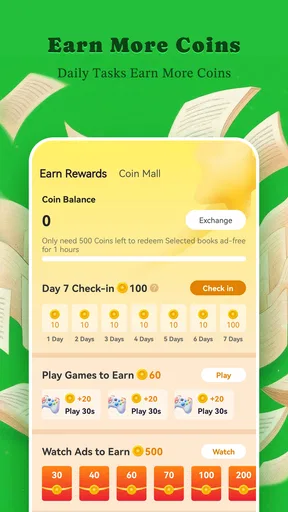
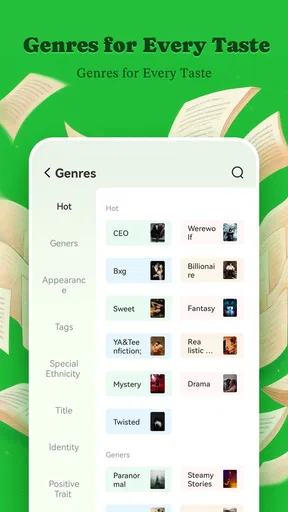
Our Review of LeafNovel - Novels & Stories
 Analysis by Appyee
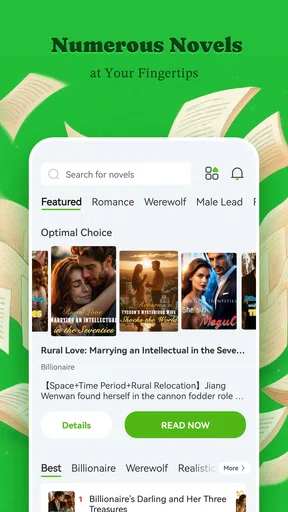
I spent time with LeafNovel - Novels & Stories as a mobile reading app, and my first impression was that it is aimed at readers who want a steady stream of web fiction rather than a carefully edited digital library. Its focus is broad: romance, fantasy, werewolf fiction, and other serialized stories are all part of the experience. That variety is the main attraction, but it also means the app feels more like a discovery shelf that keeps changing than a traditional ebook reader.
The app comes from Dancing Leaf and sits in the Books & Reference category. It is free to install, with optional purchases ranging from a few dollars to higher-priced bundles. That setup matters because the best way to judge it is not simply to ask whether it opens without payment. The more useful question is whether its reading flow suits the way you consume ongoing fiction, especially if you dislike interruptions or prefer to own complete books outright.
How LeafNovel feels during everyday reading
I find that LeafNovel works best when I decide what I want to read before opening it: a short return to a story already underway is less distracting than browsing without a plan. That small habit also makes it easier to notice whether the fiction itself is holding my attention, rather than the promise of endless choices. The next section looks at how those everyday reading habits shape the app’s overall appeal.
A quick start, with expectations set by the kind of app it is
LeafNovel is built around the appeal of finding something new quickly. Instead of opening a single novel that I already own, I approached it as a place to browse, sample, and decide which stories deserved my attention. That makes the first few minutes more important than they would be in a basic EPUB reader. The app needs to get me from curiosity to an actual chapter without making the process feel like work.
In practical terms, this kind of reading app is best suited to short sessions: a few chapters during a commute, a break, or before sleep. The web-novel format naturally encourages returning to the same story repeatedly, so I would not judge it by the standards of a minimalist reader designed only to open local files. Its purpose is broader, and that usually brings more screens, more discovery, and more decisions before reading.
The store presents it as an unlimited reading service for web novels, stories, and fiction. I would interpret that promise as an invitation to explore a large stream of material, not as a guarantee that every title will match the quality or pacing of a professionally edited paperback. Readers who enjoy discovering unfamiliar authors may find that trade worthwhile. Readers who want polished prose from established publishers may feel that a conventional ebook store is a better fit.
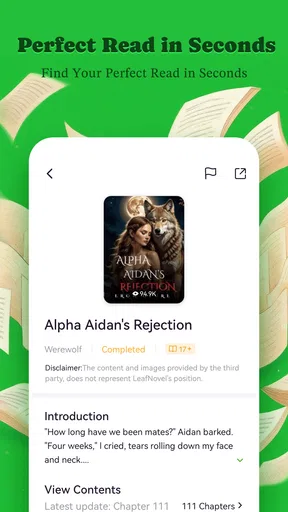
One useful habit is to judge a story after its opening rather than committing because the premise sounds familiar. Romance and werewolf fiction can share similar hooks, while fantasy titles may vary widely in tone and pacing. I found that browsing works best when I treat the first chapter as a test: is the writing comfortable to read on a phone, does the conflict arrive soon enough, and do I actually want to return to the story later?
What happens when reading turns into a long session
The heavier use case is not launching the app once. It is moving through several chapters, switching between discovery and reading, and returning to a story after a pause. That is where a web-fiction app has to prove its value. A reader may begin with one title, browse for another, then return to the first after remembering a detail. The experience is more demanding than simply opening a static book file.
My advice is to keep the reading routine simple. Choose one or two stories that genuinely hold your attention, and avoid filling your reading time with endless browsing. The abundance of serial fiction can become a distraction in itself. If you spend more time comparing titles than reading them, the app is working as a catalog but not necessarily as a satisfying reading tool.
Long sessions also expose the trade-off between convenience and concentration. A dedicated ebook reader usually removes most of the surrounding temptation. LeafNovel, by contrast, is designed to keep fiction discovery close at hand. That is helpful when I want a new story immediately, but less helpful when I am trying to finish a chapter without being pulled toward something else.
For a realistic everyday example, imagine having fifteen minutes before an appointment. I would open LeafNovel, return to a story already in progress, and read rather than search. That is the strongest routine for this app: use discovery when I have time, then make short reading sessions about continuation. Starting a new title every time creates unnecessary friction and makes it harder to tell whether the library is genuinely useful to me.
Stability matters more than raw speed
With a reading app, perceived speed is not only about how fast the first screen appears. It also includes whether the reading flow feels dependable when I move between chapters, browse fiction, or resume a title later. A small delay is tolerable if the app brings me back to the right place. Losing track of a story or having to repeat the same navigation is much more irritating.
I would therefore make a distinction between the app’s reading purpose and the demands of a media-heavy service. LeafNovel is not something I would install for demanding graphics or complex interaction. Its central task is presenting text and helping me find more text. That should make it feel relatively approachable on compatible phones, although the surrounding catalog experience can still feel busier than a plain reader.
Resource use is another practical consideration. I would not expect a text-focused app to place the same burden on a device as a game, but long reading sessions can still affect battery life through screen time, network activity, and repeated browsing. The sensible approach is to keep brightness comfortable, avoid leaving several discovery screens open unnecessarily, and use a stable connection when loading new material. Those are small habits, but they make the experience feel more consistent.
I also prefer to separate a temporary loading pause from a genuine reliability problem. If a chapter takes a moment to appear, that may be a network issue rather than a flaw in the reading interface. If the app repeatedly loses my place or makes me reconstruct where I was, that is more serious because it damages the basic promise of a serial reading service. For this reason, I would test the app with one story over several sessions before deciding whether it deserves a permanent place on my phone.
Recovery after interruptions
Mobile reading is full of interruptions. A call arrives, I switch to a message, the phone locks, or I close the app because I need to do something else. The recovery experience is especially important for serialized fiction because I may return hours later and remember only the broad scene, not the exact chapter.
My practical recommendation is to note the title and chapter mentally before leaving a session, particularly during the first few uses. It is a simple safeguard while I learn how the app handles returning to a story. I would also avoid assuming that every reading service behaves like a dedicated ebook app, where the last position is always the central feature. A quick check after reopening tells me whether LeafNovel fits my own routine.
This is one area where a traditional ebook reader may be preferable for serious long-form reading. If I am working through a book for study, book club discussion, or careful annotation, I want a predictable place marker and a calm interface. LeafNovel makes more sense when the main goal is entertainment and ongoing discovery, where a little browsing is part of the appeal.
Device compatibility and sensible expectations
The app supports Android devices running version 7.0 or later, which covers a wide range of phones but still leaves very old hardware outside its intended reach. Compatibility alone does not tell me how comfortable every device will feel. Screen size, available storage, connection quality, and the age of the phone can all influence the experience, especially when browsing a large collection of fiction.
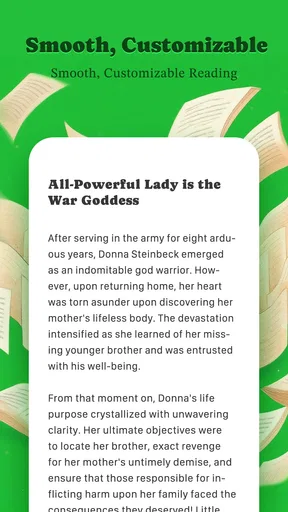
On a smaller screen, I would pay attention to reading comfort rather than trying to compensate by forcing long sessions. A phone that is fine for a few chapters may become tiring after an hour. On an older device, I would keep expectations modest when moving rapidly between browsing and reading. If the app feels sluggish, the problem may be the phone’s age, background activity, or connection rather than the text display itself.
There is also a useful distinction between storage and data use. Reading text is generally lighter than streaming video, but discovering many titles can involve more network activity than staying inside one already-open story. Anyone with a limited mobile plan should make browsing decisions thoughtfully and prefer a reliable connection for extended exploration. I would not install the app on a device with almost no free space, because any reading service is more comfortable when the phone is not already struggling to manage storage.
Who will get the most from it?
LeafNovel is a good match for readers who enjoy serial fiction and like moving between familiar genres. The mix of romance, fantasy, and werewolf stories gives it a clear identity for people who want dramatic hooks, recurring characters, and the feeling of following a story over time. It is also appealing if I do not want to spend money before finding out whether a title can hold my attention.
The free entry point lowers the barrier to trying it, but I would still approach optional purchases carefully. The presence of in-app items means the reading experience can involve spending decisions, so I would first establish how much I actually read and which stories I value. A reader who prefers a one-time purchase for a complete, fixed-length book may find the model less comfortable than buying an ebook directly.
It is less suitable for children because the content rating is Teen, and parents should treat that rating as a reason to consider whether the themes and reading choices fit a particular young reader. It is also not my first recommendation for academic reference, technical manuals, or a personal library of DRM-free books. Those uses call for search, organization, and ownership features that are different from the appeal of a continuing fiction catalog.
Three ways to use it more intelligently
First, I would create a small personal filter before browsing. Decide whether I want a fast romance, a fantasy with longer world-building, or a supernatural story with a darker mood. This sounds obvious, but it prevents the catalog’s variety from turning every reading session into indecision. The app is more enjoyable when I use its range deliberately rather than opening every promising title.
Second, I would treat early chapters as a quality check, not a promise. Serialized fiction often relies on hooks and gradual development, so a dramatic opening can be effective without telling me whether the middle will remain engaging. I would give a story enough time to establish its direction, then leave it if the voice, pacing, or character choices no longer work for me. Free access makes that experimentation easier, but my time is still the scarce resource.
Third, I would separate discovery sessions from reading sessions. Browse when I am in the mood to choose; read when I have already selected a story. This reduces the app’s most likely source of friction: repeatedly interrupting a chapter to look for something else. It also gives me a clearer sense of whether I like the actual reading experience or merely enjoy the promise of a large catalog.
A fourth useful check is financial. Before buying any in-app item, I would ask whether I am paying to continue one story I truly enjoy or simply reacting to the pressure of a cliffhanger. That distinction is important in serialized fiction. The free installation is a reasonable way to explore, but optional purchases should remain a conscious choice rather than an automatic part of every session.
How it compares with ordinary reading alternatives
Compared with a standard ebook app, LeafNovel feels more discovery-led and more closely tied to ongoing web fiction. A conventional ebook reader is usually better when I already know the book I want, need dependable offline access, or care about building a neat personal library. LeafNovel is stronger when I want to browse genre fiction and sample stories without selecting a finished book in advance.
Compared with reading novels in a mobile browser, a dedicated app should feel more focused because the reading activity has its own home on the phone. The trade-off is that I am committing storage and attention to another app rather than simply visiting a website. Whether that is worthwhile depends on how often I read this kind of fiction. Occasional readers may prefer the browser; regular serial-fiction readers are more likely to appreciate a dedicated destination.
Compared with subscription libraries, the appeal here is the emphasis on web novels and story discovery rather than a broad catalog of traditionally published books. If my taste is centered on current serial formats and genre-specific hooks, that focus can be useful. If I want acclaimed backlist titles, nonfiction, or a consistent editorial standard, I would look elsewhere first.
My performance verdict
After weighing the speed expectations, heavier reading moments, recovery needs, and device considerations, I see LeafNovel as a focused entertainment app rather than an all-purpose reading replacement. Its main strength is the chance to explore a steady supply of web fiction across recognizable genres. Its main weakness is that the same catalog-driven design can encourage browsing, spending decisions, and uneven expectations about the material.
The app has reached over one hundred thousand installs and holds an average rating of 3.3 from roughly eight hundred ratings, with just under three hundred written reviews. Those figures suggest a real audience but also a mixed reception, so I would not install it expecting universal polish. I would test it against my own reading habits: can I find stories I enjoy, return to them comfortably, and keep the optional purchase model under control?
The current version is 1.8.0, and the app is marked for Teen readers. Those details make it sensible to check compatibility and content suitability before settling in, especially on an older Android phone or a device shared with a younger family member. The developer is Dancing Leaf, and the app remains free to start, while individual in-app purchases can cost from $2.99 to $24.99.
My recommendation is straightforward. Try it if you enjoy romance, fantasy, werewolf fiction, and other serialized stories, and if discovering new authors is part of the fun. Skip it if you want a quiet, ownership-focused ebook shelf, rigorous reference reading, or a reading experience with no temptation to browse or spend. For the right reader, the best workflow is simple: discover selectively, read consistently, and treat purchases as optional decisions. That approach lets LeafNovel’s variety work in its favor without allowing the catalog to take over the reading experience.
Verdict
Strengths of LeafNovel - Novels & Stories
- Large selection of novels and serialized stories across multiple genres.
- Personalized recommendations help readers discover new titles quickly.
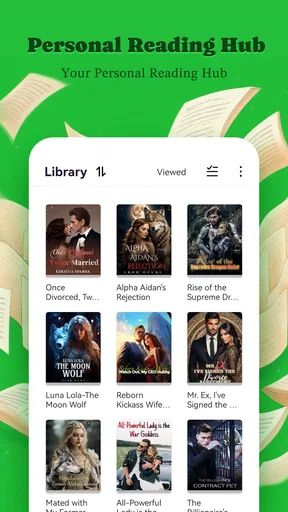
- Reading progress syncs conveniently across supported devices.
- Regular updates provide fresh chapters for ongoing stories.
- Simple interface makes browsing and reading easy for most users.
Limitations of LeafNovel - Novels & Stories
- Some stories may require coins or purchases to unlock later chapters.
- Chapter release schedules can vary between different novels.
- Content quality may be inconsistent across independent authors.
- Offline reading options may be limited for certain titles.
- Frequent notifications can become distracting without adjustment.
Similar Picks in This Category
View All
Google Play Books & Audiobooks
Google LLC4.7

네이버 - NAVER
NAVER Corp.3.5

Wattpad - Read & Write Stories
Wattpad.com3.7

King James Bible - Verse+Audio
Ozion4.8

Bible Offline-KJV Holy Bible
Bíblia Offline4.9

Amazon Kindle: Reading App
Amazon Mobile LLC4.8
Frequently Asked Questions
What is LeafNovel - Novels & Stories?
LeafNovel - Novels & Stories is a mobile reading platform focused on serialized fiction and digital novels. It allows readers to browse stories by genre, open chapters, follow ongoing titles, and discover new authors. The catalog may include romance, fantasy, drama, mystery, and other popular categories, although the available selection can vary by region and app version.
Is LeafNovel - Novels & Stories free to download and use?
The application can generally be downloaded without an upfront purchase, but free access does not necessarily mean that every chapter is available at no cost. Some stories may offer introductory chapters for free and then require coins, credits, subscriptions, or other in-app purchases to continue. Before reading extensively, check the pricing details shown for each title and chapter.
Does LeafNovel require an account to read novels?
You may be able to browse the library and preview selected content without registering, but an account is commonly useful for saving reading progress, bookmarking novels, receiving updates, and synchronizing your library between devices. Sign-in options and account requirements can change, so review the current login screen and privacy information before creating an account.
Can I read LeafNovel stories offline?
Offline reading depends on the features enabled in the current version of LeafNovel and may not be available for every title. If the app provides a download or cache option, chapters generally need to be saved while you have an internet connection before they can be opened offline. Purchased access, advertisements, and synchronization may still require an active connection.
Is LeafNovel - Novels & Stories suitable for all ages?
Not necessarily. Serialized fiction platforms often contain stories with mature themes, including romantic situations, violence, emotionally intense subjects, or adult language. Content ratings and warnings may differ between novels and may not always provide complete detail. Parents should review the app’s age rating, available titles, and device parental controls before allowing younger readers to use it.
